The thread running through our work is organisational learning.
We can be hired to hand over an answer, but rather we help an organisation work a hard problem well, in its own context, so that the capability stays once we have gone.
Below are examples grouped by the kind of organisation we serve and what each tends to need most.
A selection of our work

International agencies and development organisations
Turning institutional knowledge into investments that reach the rural communities they were designed for by:
>> Synthesising fragmented evidence into decision-ready guidance
>> Surfacing the operational realities that headquarters cannot see from a distance
The problem: Large agencies hold enormous knowledge, but it sits in silos, in different languages of practice, often tacit and, always at some level, away from the field.
The recurring need: It is not more evidence, but synthesis that a program designer can act on, and a read of what works on the ground, so that investment decisions hold once they meet reality.
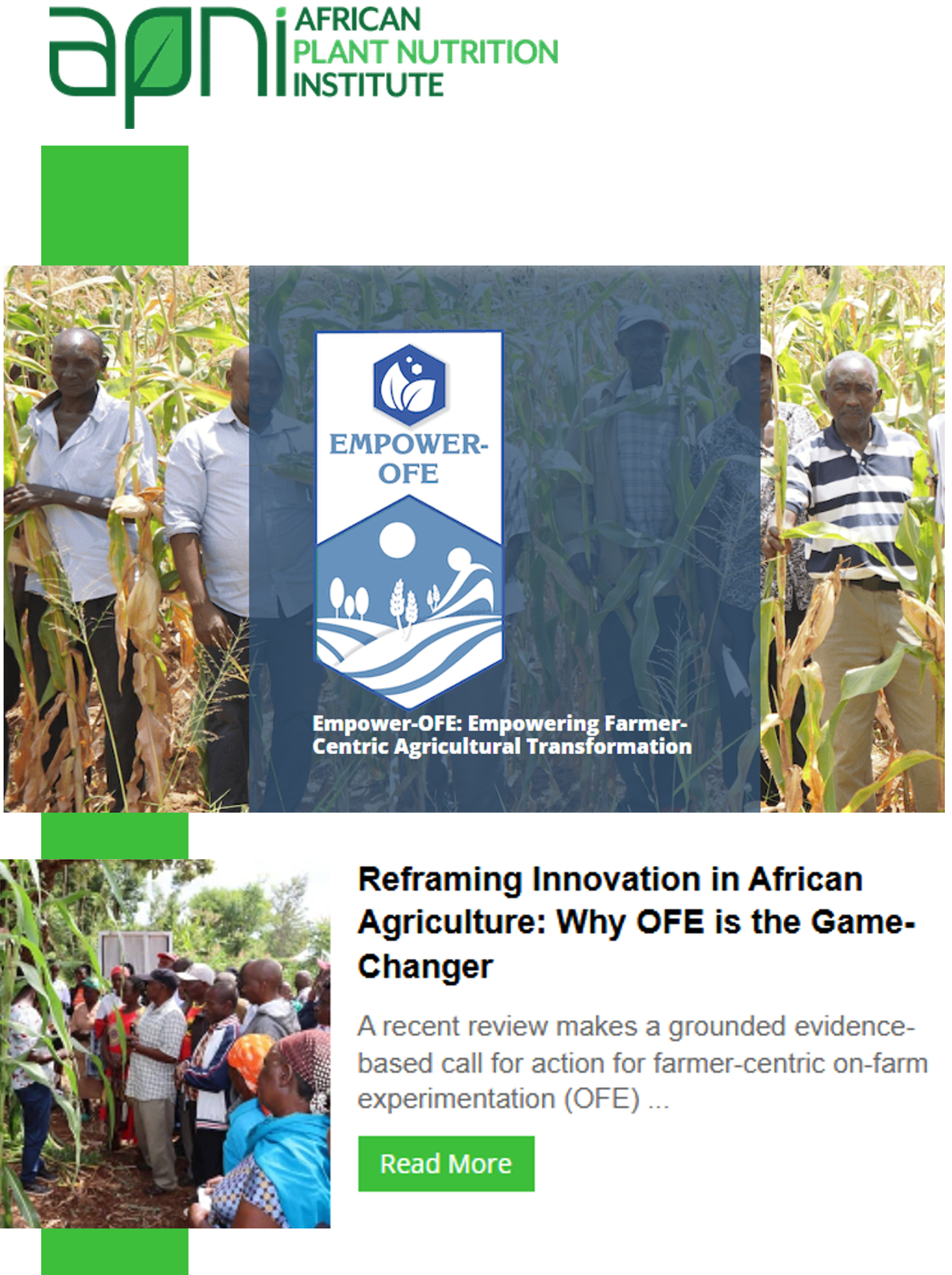
2023 - Repositioning a field-based research program. Supported the African Plant Nutrition Institute (APNI) in pivoting toward farmer-centric research for smallholder soil health. Built a credible and pragmatic program that was piloted across several African countries weaving together agronomy, co-learning, competency building and monitoring.
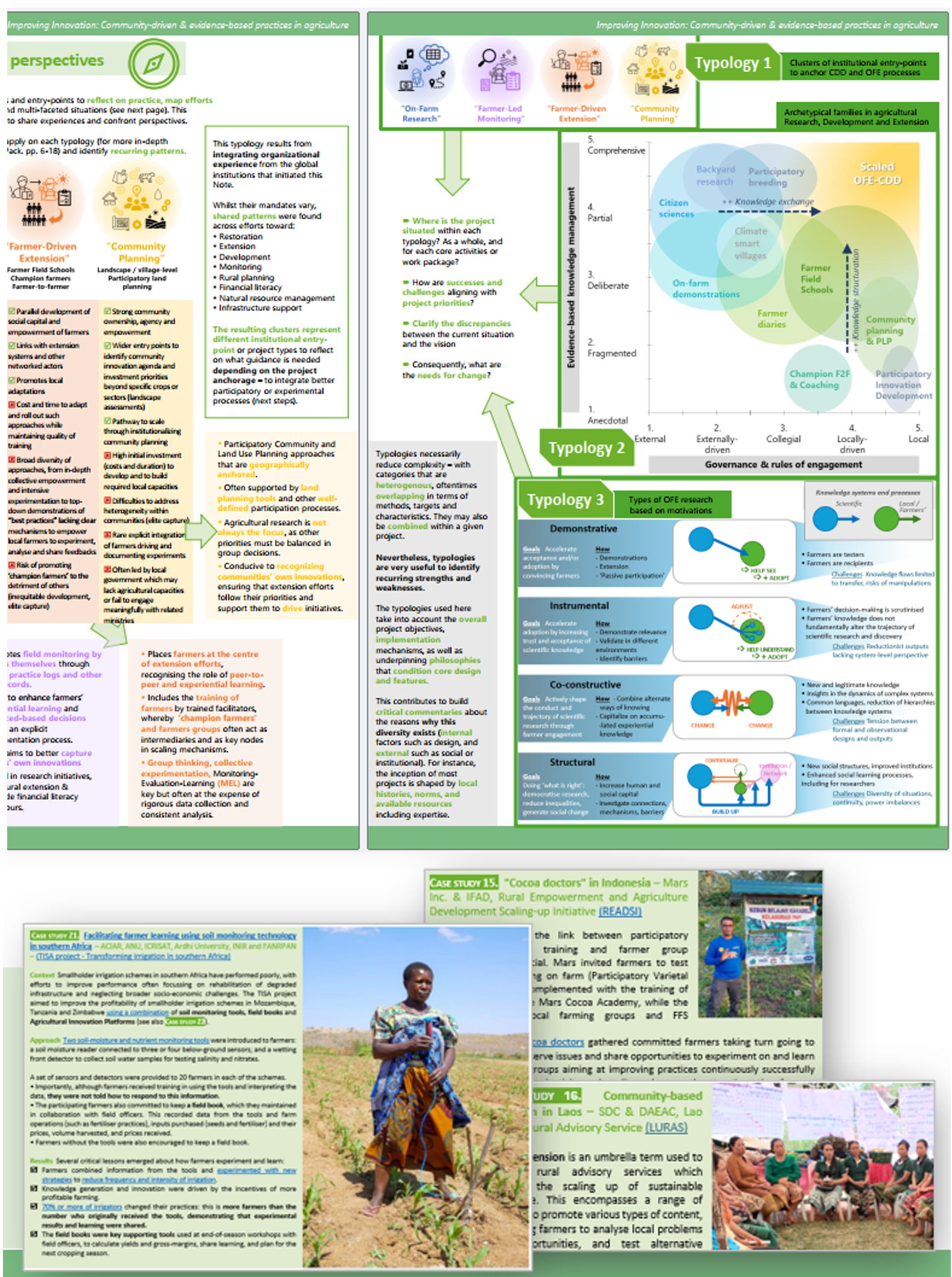
2025 - Knowledge synthesis at institutional scale. Co-led a 50-page Knowledge Pack for IFAD (UN) on scaling community-led, evidence-based innovation. Integrated perspectives from across the UN, CGIAR centres and other major research and extension initiatives. Distilled into a 15-page How-To-Do Note, with visuals that gathered over 14,000 views on LinkedIn.

Multi-partner consortia and programs
Building coherence across partners with different cultures, incentives and timelines, through:
• Reflexive monitoring methodology
• Co-design that forges alignment
The problem: Multi-partner programs fail less often on technical grounds than on human ones: partners pulling in different directions, learning that does not sufficiently circulate, risks spotted too late.
The need: Monitoring and facilitation that enables a consortium to reflect on itself actively and honestly while there is still time to adjust.
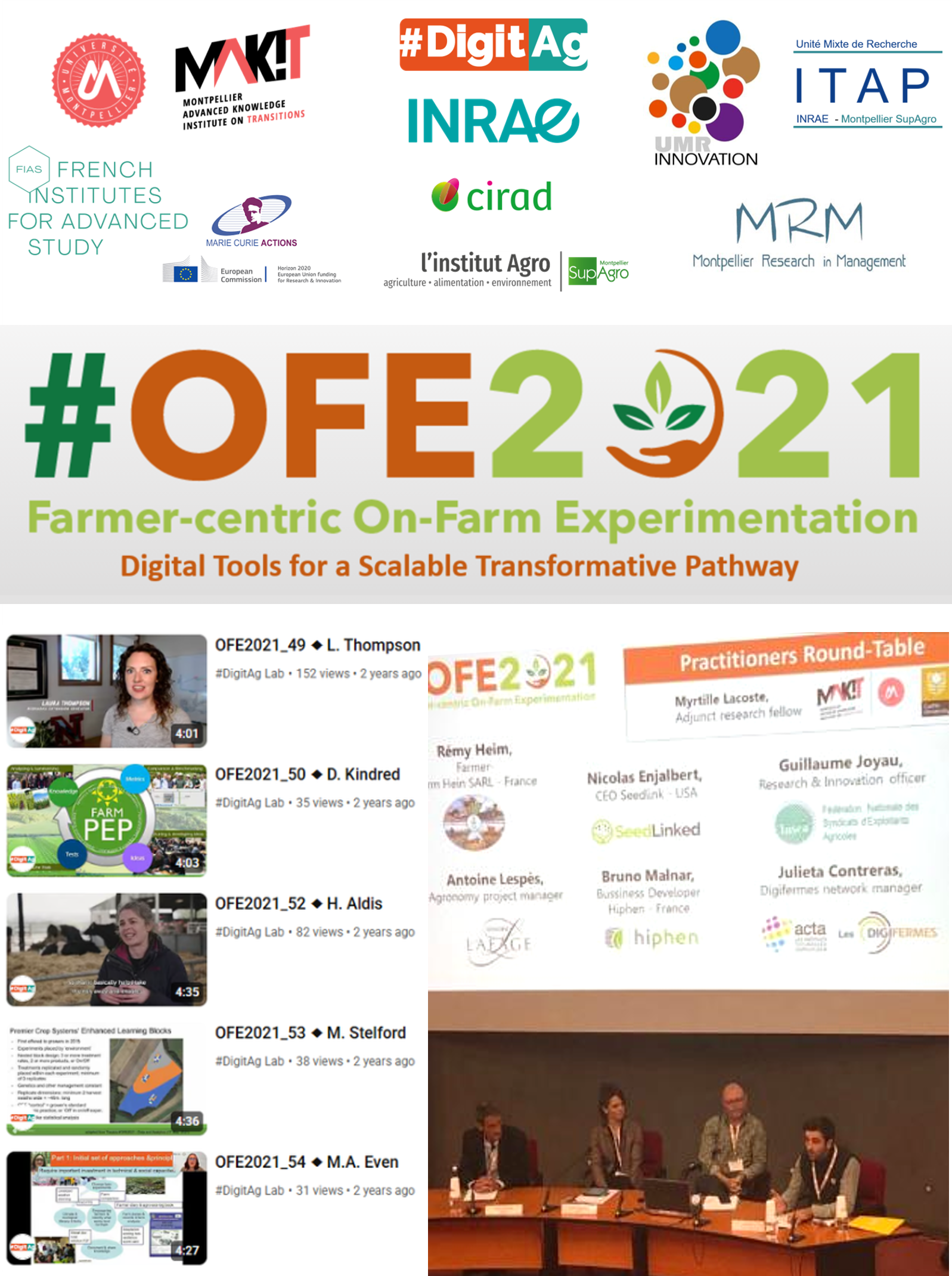
2021 - Convening a new innovation research community. Co-led #OFE2021, the inaugural international conference on farmer-centric On-Farm Experimentation, through the EU Horizon 2020's Marie Skłodowska-Curie Fellowship at MAK'IT (Montpellier Advanced Institute for Transitions with FIAS - French Institutes for Advanced Studies). Assembled expertise across contrasted scientific communities, chaired seminars and workshops, all contributing to mainstream follow-on "OFE" initiatives.
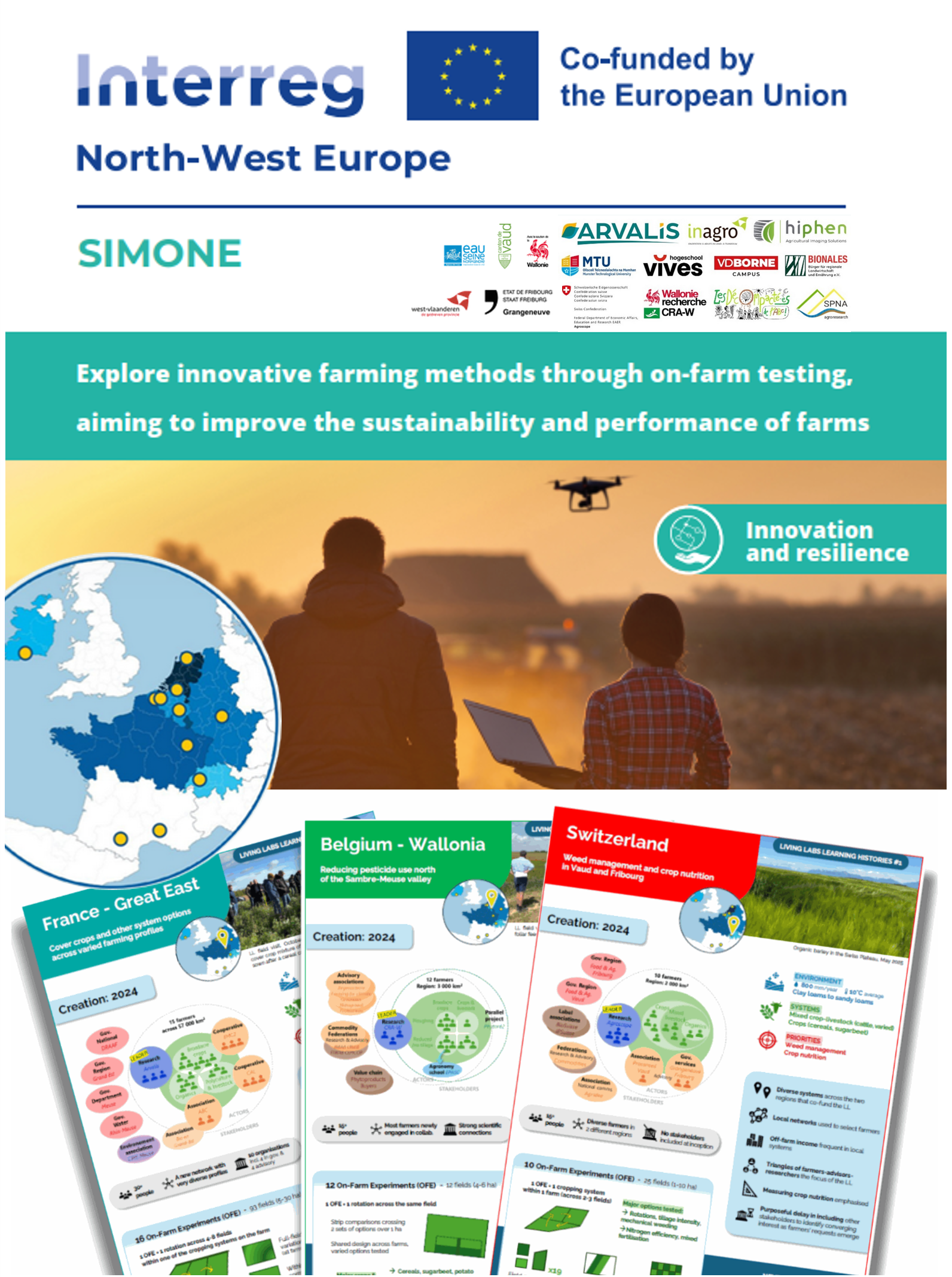
2026 - Reflexive monitoring across a complex consortium. Advised the Interreg North-West SIMONE program (€5.4M, 11 partners, 4 years) on the reflexive monitoring of 7 living labs experimenting collaboratively on farms toward agroecological transitions: interview methodology, characterisation of each living lab with its key features, indicators and stakeholder-network visualisation, learning histories that surfaced early risks and strengths.
AgTech and climate-tech start-ups
For start-ups that need the insights of science, with evidence bases and methodologies that:
• Investors, customers and regulators take seriously
• Build on hands-on agronomy and soil science
• Integrate strategic positioning, business model design, and the ability to work with research providers effectively
The problem: Start-ups in this space are often founded by strong engineers or entrepreneurs who are connected to the field but lack a science foundation to move beyond claims.
The need: Credibility that holds up to scrutiny, and for a working relationship with the research world that produces evidence rather than friction.
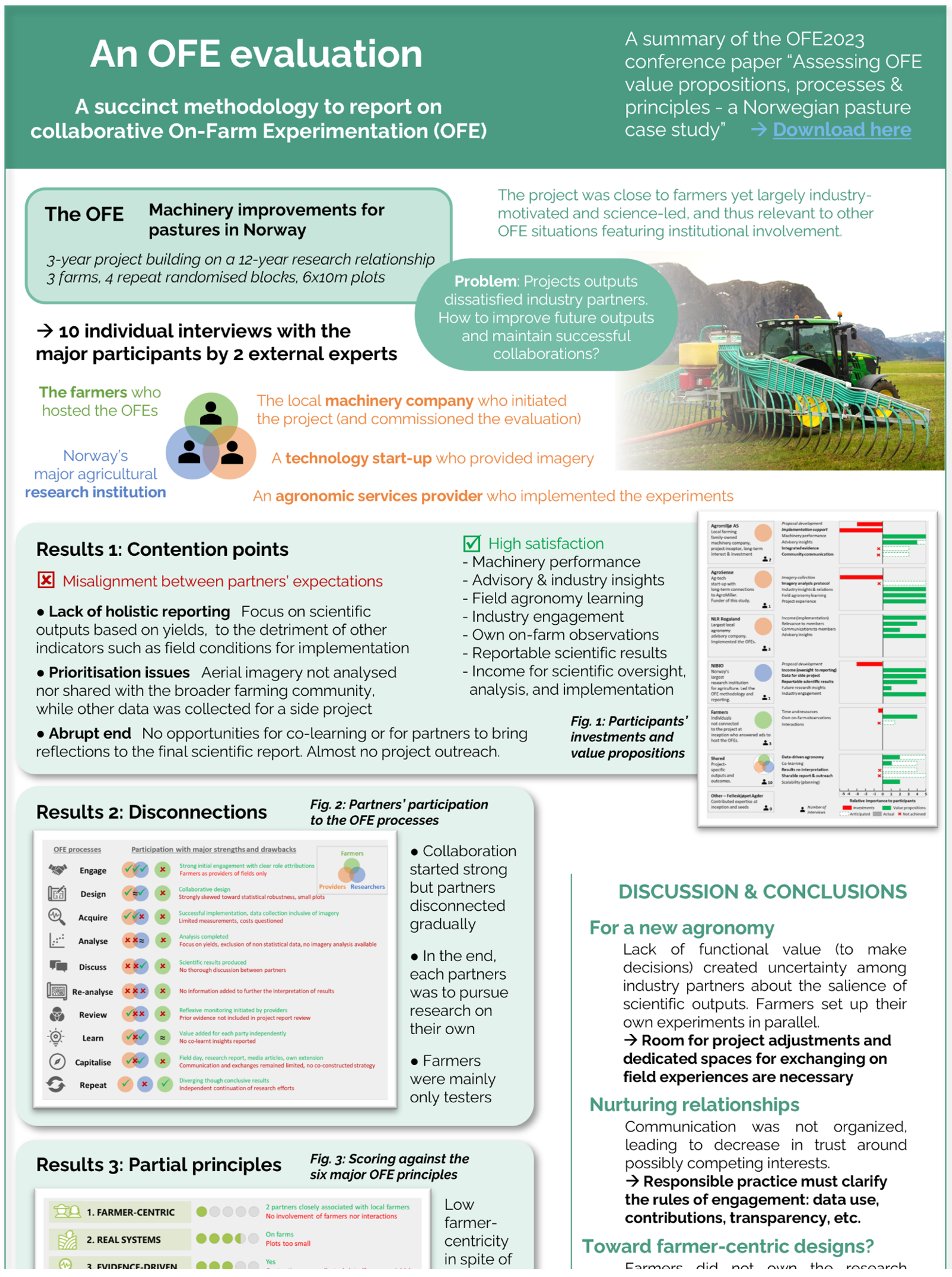
2024 - Post-project evaluation of collaborative applied research. Evaluated a three-year on-farm experiment program in pastures against both farmer expectations and scientific standards, using participant interviews structured around the processes used and the value propositions addressed, then synthesised into a one-page infographic for investor and partner communication.
2026 - Strategic and scientific advisory to an AgTech start-up. Long-term scientific, technical and strategic advisory to AgroSense S.A. on the FILIMA project (€2.2M, Norwegian Research Council): system design for regenerative pasture in dairy, a certified carbon-farming methodology under the EU nature credits scheme (CRCF), and contribution to TRL5 / BRL6 readiness ahead of go-to-market investment.

Government, social enterprises, associations and mission-driven not-for-profits
Moving from conviction to defensible practice:
• Informing user-centric development of products and services, high tech and low tech
• Building scientifically credible methods to evidence change through stakeholder learning
• Translating research into materials that farmers, land managers and policymakers actually use
The problem: Mission-driven organisations, whether farmer associations, social enterprises, or public bodies acting in a stewardship role, tend to share one of two key vulnerabilities: a strong conviction that outpaces the evidence base behind it, or a mandate facing a lack of incentives.
The need: To make the practice as credible as the cause, so that the work survives the scrutiny of funders, sceptics and opponents without losing the grounding in real farms and real landscapes.
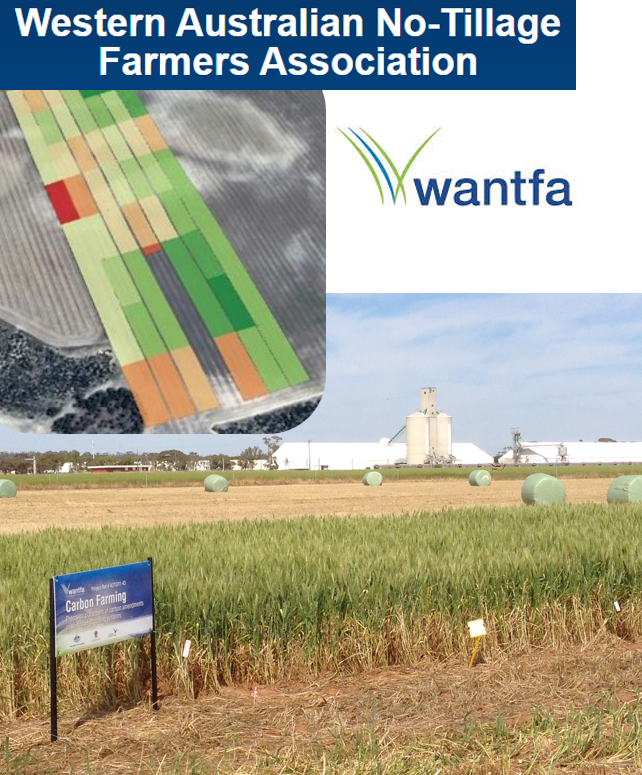
2016 - Applied multi-site research. Designed and led a four-year, multi-site soil-carbon and cover-crop program across five farms ($760K) for the WA No-Tillage Farmers Association, doubling the organisation's annual research budget through strategic grant development aligned with emerging national soil-health priorities. Co-managed the $4.4M GRDC Dry Seeding Project with CSIRO and DPIRD, the WA Dpt. for Agriculture.
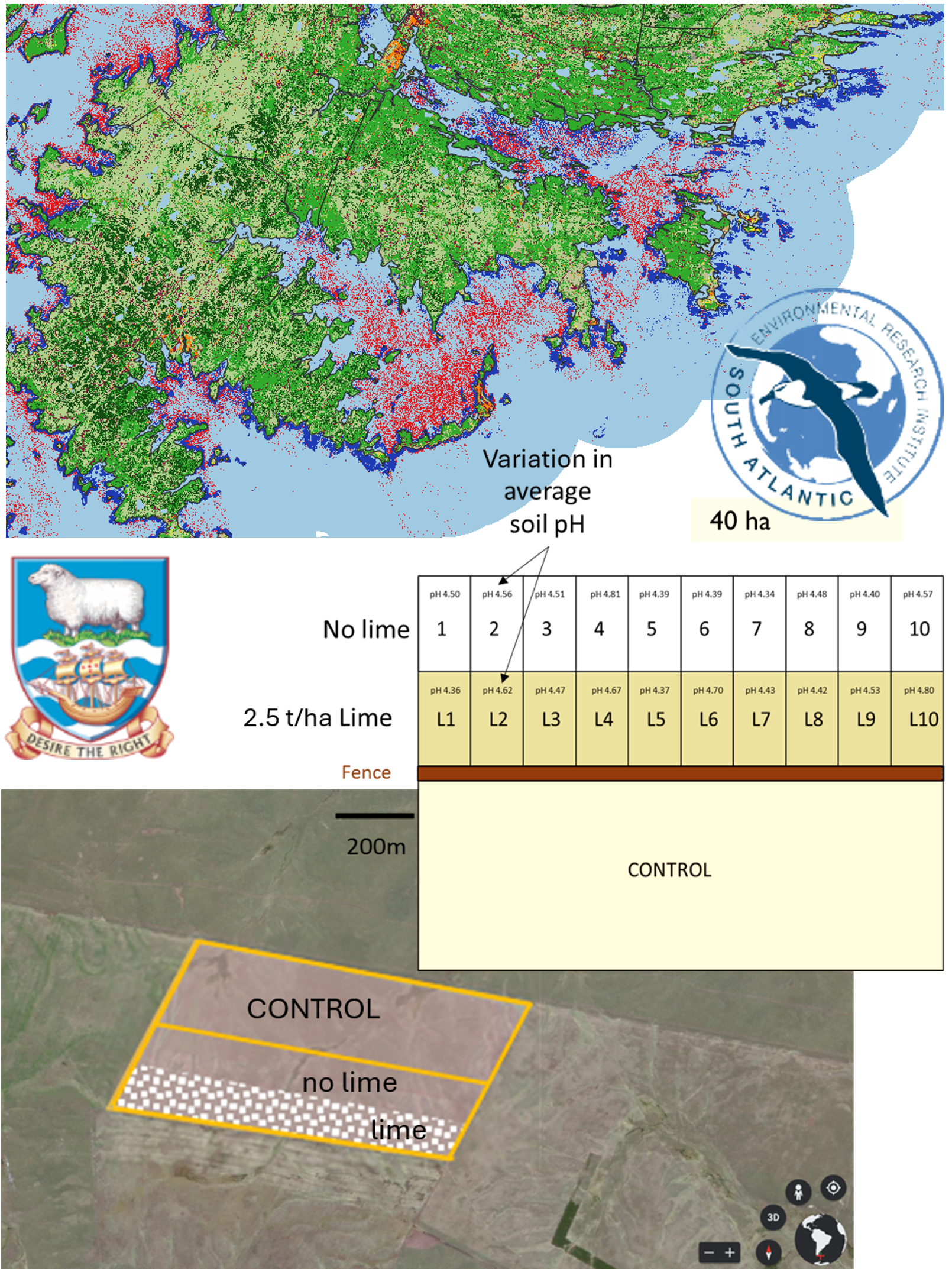
2022 - Repositioning advisory services in a remote environment. Led the shift at the Falkland Islands Department of Agriculture toward soil and landscape restoration across rangelands, seeded pastures, peatlands and coastal zones, introducing a farmer-centric research model that rebuilt institutional relationships. Raised landholder engagement by 30%, with outputs in farmer-facing media and at international conferences.

Research institutes and universities
Extending the reach of research beyond academia, through:
• Program strategies, roadmaps and knowledge syntheses
• Bridging formal science and the people meant to benefit from it
The problem: Research institutions produce rigour in abundance. Reaching "end-users" well is an on-going struggle.
The need: To carry great science across boundaries and into use by sharpening a centre's strategic direction, by translating a body of work into something a policymaker can hold, or by framing a question so that its answers can travel.
2026 - A policy roadmap connecting research, technology and equity. Produced the first version of "A Roadmap for Enhancing Technical Assistance for Conservation Agriculture through Technology, Data, and AI Innovations" for Cornell University and the Keystone Policy Centre, integrating literature reviews, stakeholder focus groups and interviews. Drew figures synthesising the barriers facing advisory services and the major AI and digital risks for rural equity, resilience and conservation.
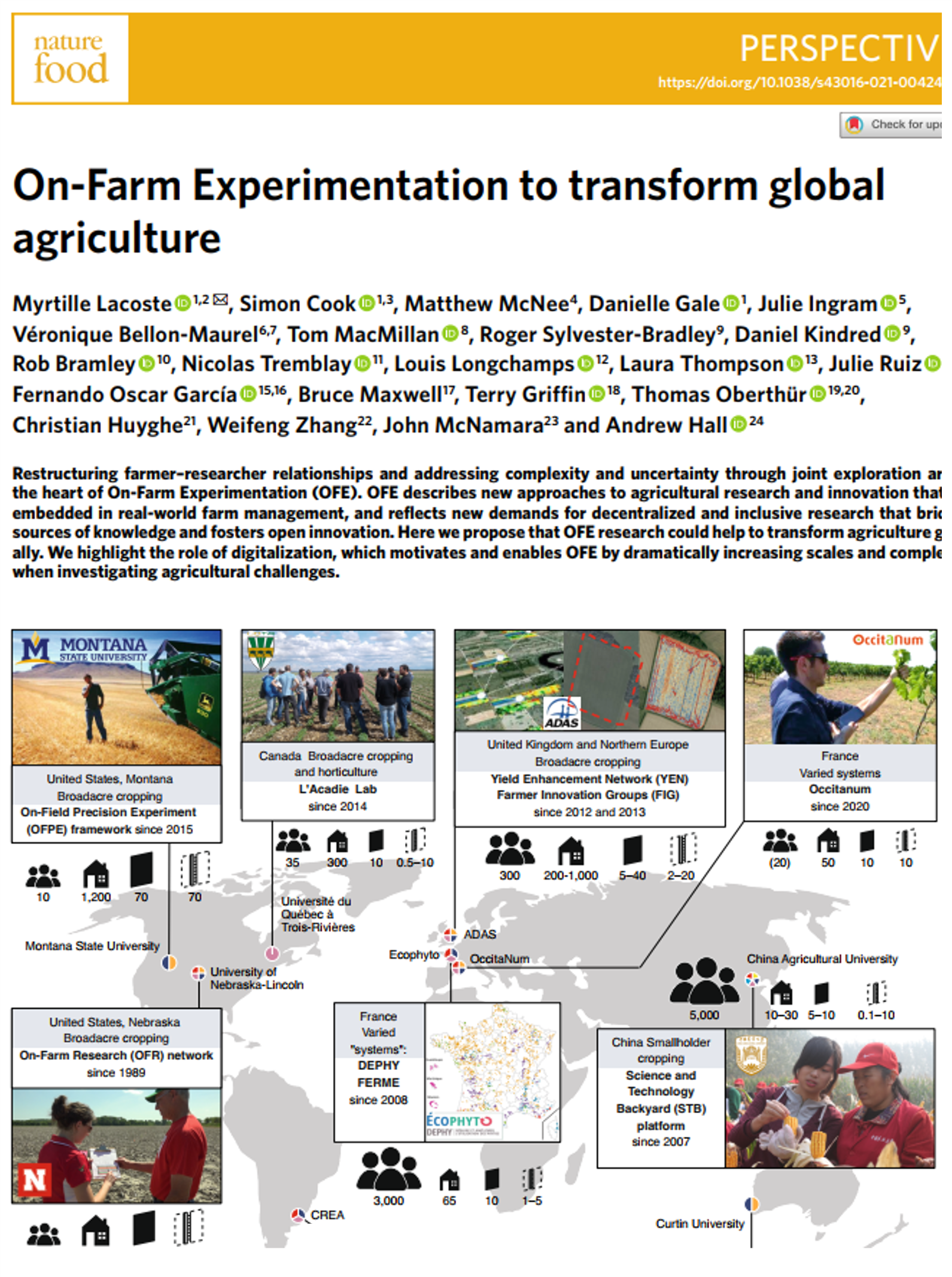
2022 - A flagship publication that renewed a field. Led the development of "On-Farm Experimentation to transform global agriculture" (Lacoste, Cook, McNee et al., Nature Food), a global perspective harnessing the depth of 20 international co-authors, consistently in the top 2% of most-accessed publications in its category, and recognised internationally as foundational to farmer-centric research thinking.